
Proper posture will allow your child to not only look confident and attractive but also avoid back and neck pain, reduce the risk of injuries and joint pain, heartburn, and increase breathing depth. If you keep your back straight and form the correct movement pattern, you can avoid spinal curvature and other problems not only in childhood but also in adulthood.
How Posture Develops in Children
Human posture is formed in childhood. Therefore, it is important to understand how to maintain proper posture in a child so that they do not face problems as an adult.
At the age of 6–9, we often see children with shoulder blades sticking out in different directions, a protruding belly, and excessive lumbar curvature. This is normal. Stable posture forms later. Its formation period is from 8 to 17 years old, and movement patterns continue to form until the age of 21.
Usually, the posture achieved in childhood is maintained throughout life. Then, as a person ages, muscles become stiffer, spinal mobility deteriorates, the movement pattern changes, and posture worsens again. Measures must be taken to keep the back straight.
Why It Is Important to Avoid Posture Disorders in Children
Posture disorders are a path to scoliosis, excessive kyphosis and lordosis (spinal curvatures), as well as osteochondrosis – degenerative processes that become the cause of back pain. To avoid these consequences, it is important to timely use back-strengthening exercises for children.
How Posture Is Formed
A child's posture depends on three components:
- Skeletal balance
- Muscular balance
- Movement pattern
Usually, a posture disorder is an acquired, not a congenital problem. Therefore, posture prevention in children is quite effective.
Most often, stooping, round back, and other problems appear in weak, skinny, untrained children with weak back musculature. Due to muscle weakness, the load on the spine increases, which raises the risk of its curvature.
What Is Considered Normal Posture
Normal posture is the symmetrical position of all body parts relative to the spine. The line of the spine, formed by the spinous processes of the vertebrae, should run strictly down the center of the back. The center of gravity should project onto a conditional line connecting the hip joints.
Body proportions in children change as they grow. Therefore, normal posture may differ among different categories of children.
- Preschool age. The torso is vertical, the chest is symmetrical, and the belly protrudes forward. The formation of lumbar lordosis begins.
- School age. The head and torso are positioned on one vertical line, and the shoulders are level and horizontal. The shoulder blades are pressed against the back. The spinal curves are already expressed but still moderate. The protrusion of the belly is reduced, but it still sticks out relative to the chest. The pelvic tilt gradually approaches that of an adult, differing between boys and girls.
- Adolescence. With straight legs, the torso and head are vertical. The shoulders are lowered and positioned at the same level. The belly is flat. Now it is drawn in relative to the chest. Girls have a more pronounced lordosis (forward curve), while boys have a more pronounced kyphosis (backward curve). The depth of the cervical and lumbar lordosis corresponds to the width of the palm.
What Posture Is Considered Pathological
The following types of pathological posture are distinguished in children:
- Stooping. This is an increased thoracic kyphosis in the upper part of the chest, with a decrease in the curve in the lumbar region.
- Round back. The kyphosis is increased throughout the entire chest.
- Hollow back. The lumbar curve is increased (the belly protrudes forward).
- Round-hollow back. A combination of the two above-mentioned deformities.
- Flat back. All natural spinal curves are flattened.
- Scoliosis. A lateral deformity. The two halves of the body become asymmetrical.
Each deformity is also assigned a severity degree: from first to third. In the most severe third-degree deformities, the curvatures do not disappear even when the child straightens up or hangs on a gymnastic wall.
How to Form Normal Posture or Eliminate Pathological Posture
Physical education is the main way to prevent scoliosis in children and avoid posture disorders. Strengthening the muscles will ensure the correct formation of spinal curves and reduce the risk of lateral curvature.
Additional methods:
- posture corrector for children
- wholesome and varied nutrition
- prolonged lying on the back
- correct sitting at a desk
- massage
- orthopedic shoes
- swimming
- dancing
To prevent posture disorders, harmonious physical development of the child without special exercises is sufficient. To correct pathological posture, exercises are used that are selected individually by a therapeutic physical education specialist. Training continues throughout life. Children with scoliosis may require an orthopedic corset.
What Is a Posture Corset for Children
While special, custom-made corsets are required for the treatment of scoliosis and other spinal pathologies, standard back correctors for children can be used to prevent such disorders, maintain, and form normal posture. These are selected according to size.
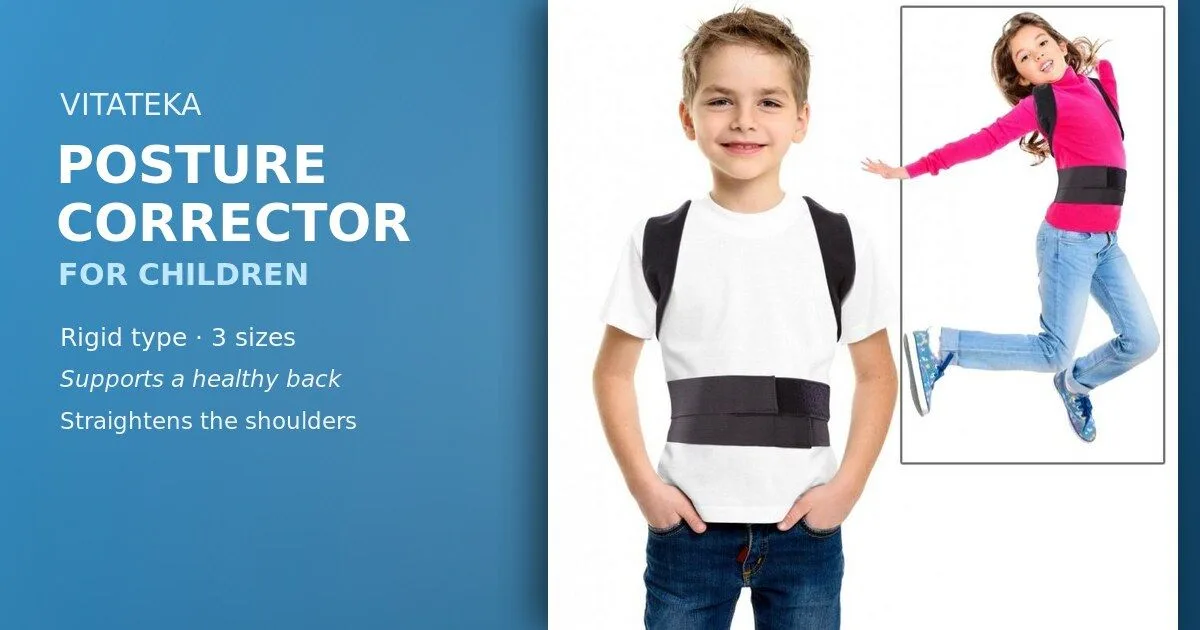
In our store, you can purchase a rigid children's posture corset. It looks like a construction of straps. The fabric contains cotton, polyester, and latex. When putting it on, the child tightens the belt at the waist, then the shoulder straps, like a backpack. As a result, the shoulders shift forward. The corset is fastened with Velcro. The back is covered down to the waist. For better support, removable rigid ribs can be used. They adapt to the figure, following the contours of the body.
The corset can be used for:
- posture formation
- prevention of scoliosis and other spinal problems
- stopping the progression of an existing spinal disease
- with decreased muscle tone of the shoulder girdle and chest
The corset limits undesirable movements, relieves muscle load, gradually forms the correct movement pattern, relieves muscle spasms, and distributes the load on the spine. Gradually, the child develops a habit of keeping the back straight, so good posture is maintained even during periods when they are not wearing the corset.
The posture corrector can easily be hidden under clothing. It has a small volume, is lightweight, and does not cause discomfort.
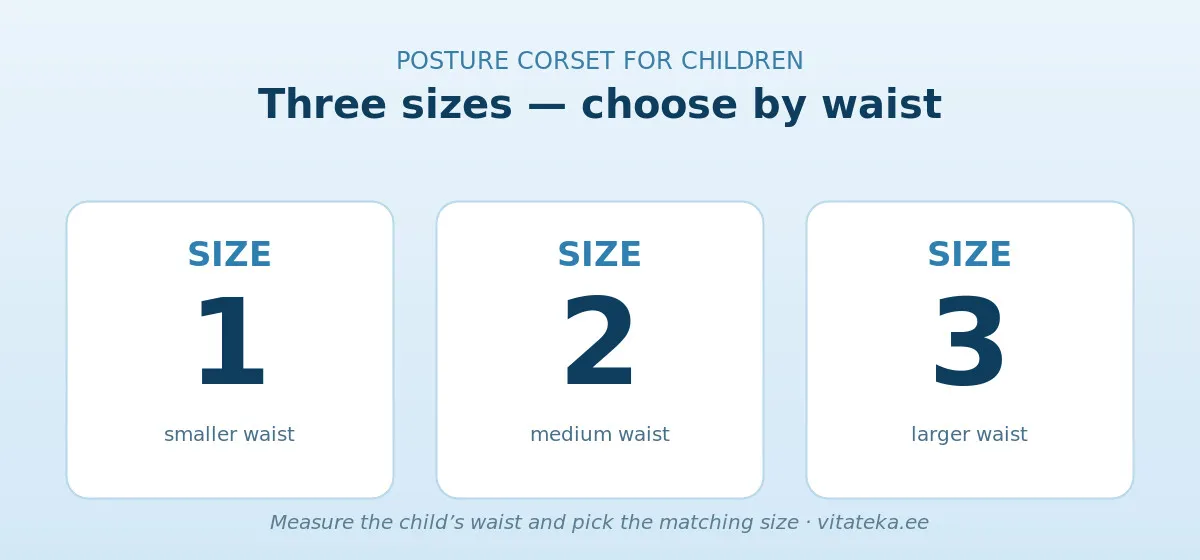
On our website, the corset is presented in three sizes. The right size for your child must be selected based on the waist circumference.
Are Exercises Needed If You Wear a Corset
A corset is not meant to be worn for life. It will support the child's spine, help form proper posture and movement patterns, and then become unnecessary.
The best way to correct posture is still exercises and high physical activity, which helps strengthen the muscles of the spine, chest, and shoulder girdle. As a result, the child will develop a muscular corset instead of a fabric one.
As for orthopedic products, their advantage is an instant result. Posture will improve immediately after you put the corset on the child. It can be used during the waiting period for results from physical training, which will help correct posture no earlier than after a few months.
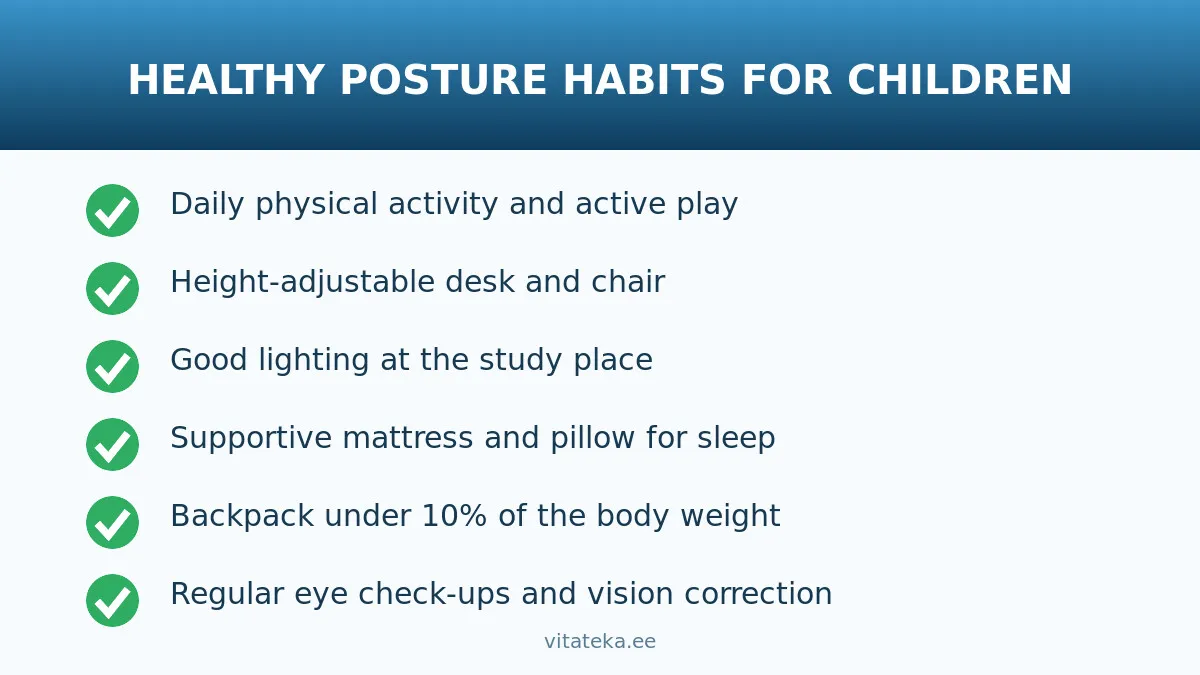
And a few more tips for improving your child's posture:
- Maintain a normal body weight, preventing obesity. High physical activity ensures normal weight in childhood without special diets.
- Ensure comfortable sleep on a good mattress. If necessary, use an orthopedic mattress and orthopedic pillow.
- Use height-adjustable furniture or regularly change the desk and chair as the child grows.
- Remind your child of the need to sit, stand, and walk straight.
- Ensure good lighting in the room.
- Regularly visit an ophthalmologist and use glasses for vision correction if necessary, so that the child does not lean too much over a notebook or gadget, or reach for the computer monitor, etc.
- Choose a good backpack with a rigid back but soft lining, with many compartments. The width of the backpack should be the same as the width of the child's shoulders. The weight when fully loaded should not exceed 10% of the child's body weight. A one-shoulder bag should not be used.
Now you know how to maintain your child's posture or correct it if problems have begun to arise. Use exercises, corsets, and follow hygiene rules to avoid spinal problems in adulthood.
Vitateka picks