Free delivery: Estonia €30 · Latvia €35 · Lithuania €40 · Finland €60 · Poland €50
Free delivery: Estonia €30 · Latvia €35 · Lithuania €40 · Finland €60 · Poland €50. 14 days to return unopened goods. Original products from official suppliers. Convenient payment: bank links, Visa/Mastercard, Apple Pay, Google Pay, PayPal. We explain how the products differ and help you choose
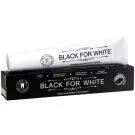
This toothpaste uses activated charcoal — a highly porous form of carbon — to physically bind and lift pigment particles that sit on the outer enamel surface and in tiny crevices between teeth. It works like a fine adsorbing sponge during brushing, not by chemically bleaching the tooth structure. Peroxide-based whiteners (strips, gels, professional treatments) penetrate enamel to break down deeper chromogens and change the intrinsic tooth shade. Charcoal toothpaste cannot do that; its effect is limited to extrinsic, surface-level discoloration from food, drink, or tobacco residue. The formula also contains fluoride to support enamel mineral balance while you brush. Because it relies on gentle polishing and adsorption rather than oxidation, it is generally less aggressive than peroxide systems, but it also cannot deliver the same degree of shade change. Think of it as a daily maintenance product for a cleaner-looking smile, not a substitute for a whitening treatment if you want a noticeable shift in your natural tooth colour.
 Loading