Free delivery: Estonia €30 · Latvia €35 · Lithuania €40 · Finland €60 · Poland €50
Free delivery: Estonia €30 · Latvia €35 · Lithuania €40 · Finland €60 · Poland €50. 14 days to return unopened goods. Original products from official suppliers. Convenient payment: bank links, Visa/Mastercard, Apple Pay, Google Pay, PayPal. We explain how the products differ and help you choose
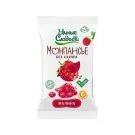
Most sugar-free sweets are based on a single sweetener — most often maltitol or sorbitol. These boiled sweets use isomalt, a sugar alcohol with a milder sweetness profile that gives a feel close to an ordinary boiled sweet, but without a harsh sugary note. Steviol glycosides have also been added — a plant-based sweetener that enhances sweetness without the calories of sugar. This combination gives a dessert-like taste, but bear in mind that in addition to the sweeteners, the composition includes caramelised starch syrup (25%), and starch syrup is a source of sugars.
The second difference is the presence of vitamin C as a functional ingredient. It is not just a flavour additive: the sweets can be seen as a small source of vitamin C during the day, although they are no substitute for a balanced diet.
The flavour profile is raspberry with a slight tartness, which is less common in sugar-free sweets than neutral fruit varieties. The boiled-sweet format (rather than a chewy sweet) means that the sweetness is released gradually — a small amount is often enough to satisfy a craving for something sweet.
If you are sensitive to sugar alcohols or sweeteners, go by your personal tolerance: isomalt and steviol glycosides are tolerated differently depending on individual characteristics. The sweets are not eaten if you are allergic to any of the ingredients; in addition, according to the label they may contain traces of eggs, dairy products, nuts and peanuts.