Free delivery: Estonia €30 · Latvia €35 · Lithuania €40 · Finland €60 · Poland €50
Free delivery: Estonia €30 · Latvia €35 · Lithuania €40 · Finland €60 · Poland €50. 14 days to return unopened goods. Original products from official suppliers. Convenient payment: bank links, Visa/Mastercard, Apple Pay, Google Pay, PayPal. We explain how the products differ and help you choose
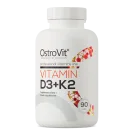
Both vitamins are fat-soluble and linked to calcium metabolism, but at different stages. Vitamin D3 (cholecalciferol) contributes to the absorption of calcium and phosphorus from food and helps maintain normal blood calcium levels. Without enough D3, calcium from food is simply absorbed less well — no matter how much of it there is in your diet.
Vitamin K2 in the form of MK-7 (menaquinone-7) comes in at the next stage: it is involved in activating proteins linked to the distribution of calcium in the tissues. The MK-7 form is valued for its good bioavailability and the long time it stays in the body compared with other forms of K2.
That is why the D3 + K2 pairing is considered logical: the two complement each other within the same metabolic process. Taking them together is more convenient than choosing two separate products and checking that they are compatible. This is particularly relevant for anyone looking for a supplement to support their bones who wants to consider vitamin D not in isolation but together with K2.
Important: this is a food supplement, not a medicine. People taking anticoagulants that are vitamin K antagonists (for example, warfarin or acenocoumarol) must not take this complex: vitamin K2 may affect how these medicines work. Taking it together with other anticoagulants should be agreed with a specialist.