Free delivery: Estonia €30 · Latvia €35 · Lithuania €40 · Finland €60 · Poland €50
Free delivery: Estonia €30 · Latvia €35 · Lithuania €40 · Finland €60 · Poland €50. 14 days to return unopened goods. Original products from official suppliers. Convenient payment: bank links, Visa/Mastercard, Apple Pay, Google Pay, PayPal. We explain how the products differ and help you choose
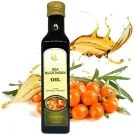
Most common culinary oils are dominated by one or two fatty acid families: olive oil is high in omega-9, sunflower oil in omega-6, flaxseed oil in omega-3. Sea buckthorn oil is unusual because the combined seed-and-berry press yields a natural blend of omega-3 (alpha-linolenic acid), omega-6 (linoleic acid), omega-9 (oleic acid) and a meaningful amount of omega-7 (palmitoleic acid). Omega-7 is a monounsaturated fatty acid found in only a handful of plant sources — notably macadamia nuts and sea buckthorn — and is a structural component of skin and mucous membranes. The oil also delivers carotenoids (beta-carotene, lycopene), tocopherols (vitamin E family) and phytosterols, all of which occur naturally in the berries and seeds and survive the cold-press process. This combination means a small daily amount can diversify the fatty acid intake of a diet that otherwise relies heavily on omega-6-rich refined oils. It is not a supplement with standardised percentages; the exact ratios vary by harvest and batch, but the breadth of the profile is consistent. Use it as a culinary accent rather than a primary fat source, and you add a range of fatty acids and phytonutrients that are hard to obtain from a single bottle of any other kitchen oil.
 Loading