Free delivery: Estonia €30 · Latvia €35 · Lithuania €40 · Finland €60 · Poland €50
Free delivery: Estonia €30 · Latvia €35 · Lithuania €40 · Finland €60 · Poland €50. 14 days to return unopened goods. Original products from official suppliers. Convenient payment: bank links, Visa/Mastercard, Apple Pay, Google Pay, PayPal. We explain how the products differ and help you choose
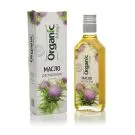
What does 'ORGANIC' and 'cold-pressed' mean for this product, and why does it matter? — LABORATORY OIL 250ML ORGANIC ALTAY - Altai Specialist (Edible oil) (Rastoropsha)
The ORGANIC label indicates that the milk thistle seeds used to make this oil come from certified organic agriculture — no synthetic pesticides, herbicides, or chemical fertilizers were used during cultivation. This matters for oils in particular because fat-soluble pesticide residues can accumulate in the final product. Choosing organic reduces your exposure to these residues.
Cold-pressing is the extraction method: seeds are mechanically pressed at low temperatures (typically below 40–50°C), and the oil is filtered but not refined, bleached, or deodorized. This gentle process preserves heat-sensitive bioactive compounds — silymarin (the flavonolignan complex unique to milk thistle), tocopherols (vitamin E), phytosterols, and polyphenols — that would otherwise be degraded or removed during refining. These compounds are responsible for the oil's antioxidant properties and are the reason people choose milk thistle oil over refined cooking oils.
The trade-off is shelf life and stability: cold-pressed oils are more prone to oxidation and have a shorter usable period after opening compared to refined oils. They also retain a stronger flavor and natural color (golden to greenish-brown, depending on chlorophyll and carotenoid content). If you want the bioactive content, cold-pressed organic is the right choice; if you only need a neutral cooking fat, a refined oil is more practical.