Free delivery: Estonia €30 · Latvia €35 · Lithuania €40 · Finland €60 · Poland €50
Free delivery: Estonia €30 · Latvia €35 · Lithuania €40 · Finland €60 · Poland €50. 14 days to return unopened goods. Original products from official suppliers. Convenient payment: bank links, Visa/Mastercard, Apple Pay, Google Pay, PayPal. We explain how the products differ and help you choose
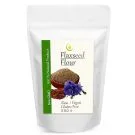
Flaxseed flour differs significantly from wheat flour in composition: it contains no gluten, is rich in protein (28 g per 100 g) and fibre, and has little fat — 6.9 g per 100 g. That is why it cannot fully replace wheat flour in most recipes — dough without gluten does not hold its shape as well and has a different texture.
In practice, flaxseed flour is added together with other flour, not instead of it. According to the label, flaxseed flour can replace up to 40% of ordinary flour; many people start with 10–20%. This enriches baked goods with protein and fibre without losing their structure.
Bear in mind that flaxseed flour absorbs moisture well: the dough or mixture becomes noticeably thicker. If you are adding it to a recipe for the first time, you may need to increase the amount of liquid slightly — water, milk or a plant-based drink.
Flaxseed flour has a mild taste with a light nutty note that goes well both with sweet bakes (pancakes, muffins, biscuits) and with neutral ones (bread, flatbreads). It is also suitable for gluten-free recipes in combination with other gluten-free flours — rice, buckwheat or maize flour.
Start with a small amount to see how the taste and texture of the particular dish change.