
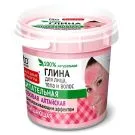
Pink Altai clay is generally considered one of the milder cosmetic clays because it contains a balanced mix of kaolinite and illite minerals with lower drawing power than green clay or bentonite. The formula also includes green tea infusion (polyphenols) and sunflower leaf water, which are commonly used to soothe and buffer potential irritation. However, "gentler" does not mean "non-irritating" for everyone.
If you have sensitive, rosacea-prone, or eczema-prone skin: Do a patch test on the inner forearm or behind the ear 24 hours before full-face use. Apply a small amount, leave for the maximum intended time, rinse, and monitor for redness, stinging, or itching.
During use: Apply a thinner layer than you would on resilient skin. Set a timer for 5–8 minutes maximum — do not wait for full drying. Rinse immediately if you feel stinging, heat, or pronounced tightness before the timer ends. Use cool or lukewarm water, not hot.
After rinsing: Apply a fragrance-free, barrier-supportive moisturiser (ceramides, panthenol, centella asiatica, oat extract) while skin is still damp. Avoid actives (retinoids, AHAs/BHAs, vitamin C) for 24 hours post-mask.
Scalp sensitivity: If your scalp is reactive, apply only to the crown and hairline — avoid the nape and temples where skin is thinner. Dilute the mask 1:1 with water for the first few uses.
Discontinue use if irritation persists beyond a few hours post-rinse. Consult a dermatologist if you have a diagnosed inflammatory skin condition (rosacea, seborrheic dermatitis, psoriasis) before incorporating clay masks into your routine.