Free delivery: Estonia €30 · Latvia €35 · Lithuania €40 · Finland €60 · Poland €50
Free delivery: Estonia €30 · Latvia €35 · Lithuania €40 · Finland €60 · Poland €50. 14 days to return unopened goods. Original products from official suppliers. Convenient payment: bank links, Visa/Mastercard, Apple Pay, Google Pay, PayPal. We explain how the products differ and help you choose
Rutin, the flavonoid for which Japanese pagoda tree is most often chosen, is available in two main formats: as an isolated extract in capsules or tablets, and as part of a whole herbal raw material such as the pagoda tree fruits.
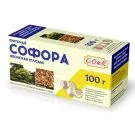
The whole raw material, as in this product, contains rutin in its natural plant context — together with other flavonoids and compounds present in the fruits. This option is chosen by those who prefer classic herbal products and are happy to brew the infusion themselves according to the method on the label: 1 teaspoon (1.5 g) per 200 ml of boiled water, 1/2–1 glass twice a day after meals, as a 1-month course followed by a break of at least 2–3 weeks. It is also a single-ingredient product without the excipients typical of tablet forms.
An extract in tablets offers the convenience of precise dosing: you know how many milligrams of rutin you get with each serving. For those who value predictability and do not want to spend time preparing a drink, this is more practical.
The fundamental difference lies not in effectiveness (there are no comparative data for this specific product) but in the format of consumption and the philosophy behind the approach. Pagoda tree fruits are the choice for those who build herbal infusions into their everyday eating ritual rather than looking for a quick, measured solution.
Neither format is a medicine, and neither is intended to treat or prevent disease.