Free delivery: Estonia €30 · Latvia €35 · Lithuania €40 · Finland €60 · Poland €50
Free delivery: Estonia €30 · Latvia €35 · Lithuania €40 · Finland €60 · Poland €50. 14 days to return unopened goods. Original products from official suppliers. Convenient payment: bank links, Visa/Mastercard, Apple Pay, Google Pay, PayPal. We explain how the products differ and help you choose
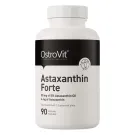
How does natural astaxanthin from Haematococcus pluvialis differ from synthetic astaxanthin, and why does it matter? — OstroVit Astaxanthin Forte, 90 capsules
Astaxanthin exists in several forms that differ in origin and chemical structure. Synthetic astaxanthin is made by chemical means and is used mainly in aquaculture. Natural astaxanthin from the microalga Haematococcus pluvialis is the form used in food supplements for people, and this is the extract included in OstroVit Astaxanthin Forte.
From a chemical standpoint, natural astaxanthin from Haematococcus pluvialis occurs mainly as mono- and diesters of fatty acids. This esterified form is considered more stable during storage than free astaxanthin. This is practically important: carotenoids are sensitive to light, heat and oxygen, so the form of the molecule affects how well the active substance is preserved until it is taken.
Astaxanthin is a fat-soluble carotenoid, which determines how it behaves in the body: it incorporates into lipid structures, including cell membranes, where it carries out its antioxidant activity. This is why the supplement is recommended to be taken with food containing fats, a standard practice for all fat-soluble nutrients.
For the consumer, the key point is to check whether the source of astaxanthin is named in the composition. In the case of OstroVit this is stated directly: Haematococcus pluvialis extract, which corresponds to the standard accepted for food supplements containing astaxanthin on the European market.