
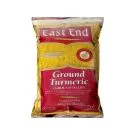
The deep yellow-orange colour comes from naturally occurring plant pigments called curcuminoids, and the same pigments can strongly stain utensils, chopping boards, fabrics and skin. This is a sign of the spice's colour intensity, not a defect.
Prevention is the easiest step. Use stainless steel, glass or enamel-coated cookware rather than light-coloured plastic; wipe boards and worktops as soon as you finish cooking; and wear an apron when working with large amounts.
If a stain appears:
- Hands: wash promptly with soap and warm water. A paste of baking soda and a little water, rubbed gently over the skin, usually lifts the yellow colour without hard scrubbing.
- Boards and worktops: for plastic and solid surfaces, rub with a paste of baking soda or a little dish soap, then rinse. Stains fade with repeated washing; avoid abrasive cleaners on polished stone.
- Fabric: treat spills quickly. Rinse the spot under cold water from the back of the fabric, apply a stain remover or a small amount of dish soap, then wash as usual. Dried turmeric stains are much harder to remove, so act before the wash cycle.
Because the pigment bonds quickly to porous materials, light-coloured wooden spoons and boards may take on a permanent golden tint. If you prefer to keep them clean, reserve dark or older utensils for turmeric-heavy recipes.