Free delivery: Estonia €30 · Latvia €35 · Lithuania €40 · Finland €60 · Poland €50
Free delivery: Estonia €30 · Latvia €35 · Lithuania €40 · Finland €60 · Poland €50. 14 days to return unopened goods. Original products from official suppliers. Convenient payment: bank links, Visa/Mastercard, Apple Pay, Google Pay, PayPal. We explain how the products differ and help you choose
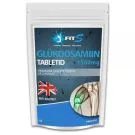
2KCL stands for dipotassium chloride — the salt used to stabilize glucosamine sulfate into a solid, dose-consistent tablet. Pure glucosamine sulfate is hygroscopic (absorbs moisture) and unstable on its own, so manufacturers bind it to a carrier salt. The two common options are sodium chloride (2NaCl) or potassium chloride (2KCL). This product uses the potassium version.
The sulfate group itself is the nutritionally relevant part: sulfur is a structural component of glycosaminoglycans and proteoglycans, the molecules that give cartilage its resilience and ability to handle compressive loads. By delivering glucosamine as a sulfate, the formula supplies both the amino sugar backbone and the sulfur in one molecule.
Each tablet provides 1500 mg of glucosamine sulfate 2KCL. This weight includes the potassium chloride carrier; the yield of elemental glucosamine sulfate is slightly lower, which is normal for this form. The 2KCL form is widely used in European joint supplements because potassium is generally well-tolerated and avoids adding extra sodium to the diet — relevant for people monitoring salt intake.
Practical note: the tablet is sized for a 1500 mg total weight, so it is larger than a typical vitamin tablet. If swallowing large tablets is difficult, you can break it along the score line (if present) or take it with a full glass of water during a meal.