
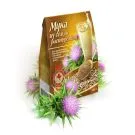
The key difference lies in the oil reduction step. Whole milk thistle seeds retain their full oil content, which can make them greasy and give a stronger, more earthy taste. The partial defatting process removes a portion of those oils, resulting in a lighter‑colored flour that mixes more easily into liquids and batters.
Because the oil is lowered, the flour’s texture is finer and less prone to separating during storage. This also means the product can be used in higher proportions in recipes without making the final dish oily, which is especially useful for baking and smooth beverage blends.
Nutritionally, the partially defatted flour still contains the seed’s fibre, modest protein, and naturally occurring fatty acids, along with the flavonoids known as silymarin. The defatting does not eliminate these compounds, so the functional benefits remain comparable to whole seeds, while the culinary handling is more convenient.
If you are pregnant, breastfeeding, giving the product to a child, or know you are sensitive to milk thistle, consult a specialist before regular use.
What distinguishes the partially defatted seed flour from whole milk thistle seeds? — YARROW SEED FLOUR 200G ELEO - Altai Specialist (Rastoropsha)
Question about the product
YARROW SEED FLOUR 200G ELEO - Altai Specialist (Rastoropsha)
€3.91
Go to product