Free delivery: Estonia €30 · Latvia €35 · Lithuania €40 · Finland €60 · Poland €50
Free delivery: Estonia €30 · Latvia €35 · Lithuania €40 · Finland €60 · Poland €50. 14 days to return unopened goods. Original products from official suppliers. Convenient payment: bank links, Visa/Mastercard, Apple Pay, Google Pay, PayPal. We explain how the products differ and help you choose
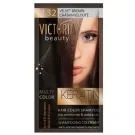
The source explicitly notes that "porous, bleached, very light, or gray hair may take the tint more intensely, while darker hair may show a softer visible change." Bleached hair has an open cuticle and no underlying pigment to buffer the deposited color, so the chestnut pigments can deposit more heavily and shift warmer or darker than the swatch suggests. You might also see uneven uptake if some sections are more damaged than others. Before committing, apply the shampoo to a small hidden strand (behind the ear or at the nape), follow the timing in the leaflet, rinse, and evaluate. If the test strand looks too intense, you can shorten the processing time, dilute the shampoo with a regular non-tinting shampoo, or limit application to the mid-lengths and ends where porosity is highest. Because the color washes out gradually, any surprise result isn't permanent — but a strand test saves you the hassle of correcting an overly dark or brassy tone across the whole head.
 Loading