Free delivery: Estonia €30 · Latvia €35 · Lithuania €40 · Finland €60 · Poland €50
Free delivery: Estonia €30 · Latvia €35 · Lithuania €40 · Finland €60 · Poland €50. 14 days to return unopened goods. Original products from official suppliers. Convenient payment: bank links, Visa/Mastercard, Apple Pay, Google Pay, PayPal. We explain how the products differ and help you choose
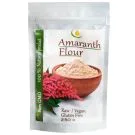
Amaranth flour contains no gluten, which in wheat flour is responsible for the elasticity of the dough and for baked goods holding their shape. Because of this, if you replace wheat flour entirely with amaranth flour, the dough may turn out denser or more crumbly, or may not hold its shape well – especially in recipes where structure matters (bread, yeast baking, light and airy cakes).
The most practical approach is to introduce amaranth flour partially – mixing it with wheat, oat, rice or other flour. People usually start by replacing 20–30% of the total amount of flour in a recipe, assess the result and increase the proportion if they wish. In pancakes, fritters, biscuits and dense cakes this combination works well: amaranth adds a nutty note to the flavour and makes the texture slightly denser.
In smoothies, yoghurt mixes and thick sauces, replacement is not an issue – there, amaranth flour is simply added in small portions as an ingredient in its own right, and it thickens the consistency well.
If you are just starting to work with amaranth flour, it is sensible to try it first in simple recipes – for example, pancake batter – to understand how it behaves in your own kitchen.