Free delivery: Estonia €30 · Latvia €35 · Lithuania €40 · Finland €60 · Poland €50
Free delivery: Estonia €30 · Latvia €35 · Lithuania €40 · Finland €60 · Poland €50. 14 days to return unopened goods. Original products from official suppliers. Convenient payment: bank links, Visa/Mastercard, Apple Pay, Google Pay, PayPal. We explain how the products differ and help you choose
Specific recommendations on when and how to take the product are given on its packaging — follow them first and foremost. Below is some general context to help you understand the logic behind these recommendations.
Vitamin D3 is fat-soluble. This means it is better absorbed with food containing fat: for example, with a breakfast or lunch that includes butter or oil, nuts, egg or another source of fat. Taking it on an empty stomach is less effective.
Zinc on an empty stomach causes nausea or discomfort in some people. Taking it with a meal or straight after one is usually better tolerated. At the same time, avoid combining it with foods rich in phytates (bran, large amounts of pulses) — they can reduce zinc absorption.
Vitamin C is water-soluble and less demanding about how it is taken, although people with a sensitive stomach also tolerate it better with food.
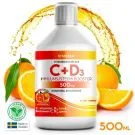
According to the label, the complex is taken every morning at 15–25 ml, after shaking the bottle thoroughly — most conveniently with breakfast: this makes sense both for the absorption of fat-soluble D3 and for digestive comfort.