Free delivery: Estonia €30 · Latvia €35 · Lithuania €40 · Finland €60 · Poland €50
Free delivery: Estonia €30 · Latvia €35 · Lithuania €40 · Finland €60 · Poland €50. 14 days to return unopened goods. Original products from official suppliers. Convenient payment: bank links, Visa/Mastercard, Apple Pay, Google Pay, PayPal. We explain how the products differ and help you choose
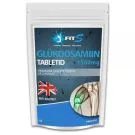
Most commercial glucosamine sulfate is produced by hydrolysis of chitin from crustacean shells (shrimp, crab, lobster). Unless the label explicitly states a non-shellfish source (e.g., fermentation-derived from Aspergillus niger or corn), you should assume a shellfish origin. This product’s pack will list the allergen declaration — look for “Crustaceans” or “Shellfish” in the ingredients/allergen box.
If you have a shellfish allergy, the risk is not zero. The purification process removes most protein, but trace residues can remain. People with severe IgE-mediated crustacean allergy are generally advised to avoid shellfish-derived glucosamine or use it only under medical supervision. A fermentation-derived (vegan) glucosamine hydrochloride or sulfate is the safer alternative.
For vegetarians/vegans: the active ingredient itself is not animal tissue, but the raw material is an animal by-product. The tablet excipients (binders, coating) may also contain non-vegan ingredients like shellac or magnesium stearate of animal origin. Check the full ingredient list on the pack for a “suitable for vegetarians/vegans” statement or V-label certification.
If the pack does not clarify the source, contact the manufacturer (Planeta Zdorovia) with the batch number for a definitive answer. Do not rely on general product descriptions; sourcing can change between batches.
Practical note: the 2KCL stabilization (potassium chloride) is mineral-derived and vegan-friendly. The only animal-linked step is the chitin source for the glucosamine itself.