Free delivery: Estonia €30 · Latvia €35 · Lithuania €40 · Finland €60 · Poland €50
Free delivery: Estonia €30 · Latvia €35 · Lithuania €40 · Finland €60 · Poland €50. 14 days to return unopened goods. Original products from official suppliers. Convenient payment: bank links, Visa/Mastercard, Apple Pay, Google Pay, PayPal. We explain how the products differ and help you choose
Use the same basic amount and frequency as you would with any fluoride toothpaste: a pea-sized portion for adults and older children, brushed in the morning and in the evening. When your gums feel irritated, the more important part is technique, not quantity. Hold the brush at a 45-degree angle to the gumline and make small circular movements rather than pressing hard and scrubbing back and forth. This lifts plaque from the margin between tooth and gum without crushing already-sensitive tissue.
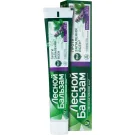
Brush for about two minutes, covering the outside, inside and chewing surfaces of every tooth. Spend a few extra seconds on the areas where the gumline meets the teeth, because that is where plaque tends to settle. The paste itself contains sage extract, aloe vera and a herbal blend of chamomile, yarrow, St. John's wort, celandine and nettle, which are included so that brushing feels less unpleasant when gums are reactive. It also contains sodium monofluorophosphate, so the enamel is still exposed to fluoride during the usual two-minute clean.
After brushing, spit out the foam rather than swallowing it. If you can, avoid rinsing with a large amount of water immediately afterwards; a common way to extend the fluoride's contact with enamel is to let the remaining film stay on the teeth. If rinsing feels necessary, take only a small sip. Try not to eat or drink for at least 30 minutes after brushing, as this gives the fluoride and plant-derived ingredients time to remain on tooth surfaces.
Choose a soft-bristled brush while your gums are sensitive, and replace it once the bristles begin to splay or after three months. This toothpaste is designed for daily oral hygiene, not as a one-time repair; consistent gentle brushing is what makes the difference.