Free delivery: Estonia €30 · Latvia €35 · Lithuania €40 · Finland €60 · Poland €50
Free delivery: Estonia €30 · Latvia €35 · Lithuania €40 · Finland €60 · Poland €50. 14 days to return unopened goods. Original products from official suppliers. Convenient payment: bank links, Visa/Mastercard, Apple Pay, Google Pay, PayPal. We explain how the products differ and help you choose
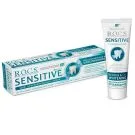
How is R.O.C.S. Sensitive Restoration and Whitening different from a regular whitening toothpaste? — R.O.C.S. Sensitive Toothpaste Restoration and Whitening 94 g
Regular whitening toothpastes usually attack stains in one of two ways: stronger abrasive particles that physically scrub the enamel, or peroxide-based bleaching that changes tooth color. Both can feel harsh when your teeth already react to cold drinks, sour foods, or even ordinary brushing.
R.O.C.S. Sensitive Restoration and Whitening is built on a different idea. It is a low-RDA, low-abrasive formula, which means the cleaning and polishing effect comes from gentle surface action rather than aggressive wear. There is no peroxide in the whitening approach; stain removal relies on mild cleaning and surface polishing. That makes it a practical option for anyone who wants a brighter-looking smile but found conventional whitening pastes uncomfortable.
The formula pairs hydroxyapatite with calcium glycerophosphate. Hydroxyapatite particles have a strong affinity for tooth tissue and can settle into tiny surface irregularities, smoothing the enamel and reducing the pathways that trigger sensitivity. Calcium glycerophosphate supplies calcium and phosphate ions — the same minerals tooth enamel naturally uses — which helps the surface look more even and better mineralized. Xylitol makes the environment less favorable for acid-forming bacteria, and magnesium participates in the mineral balance of hard tooth tissues.
In everyday terms, do not expect a bleaching-style color change. Expect gradual removal of surface stains from coffee, tea, or wine, and a glossier, more even-looking enamel surface with continued use. If your goal is to dramatically change the natural color of your teeth, that is a different procedure — one to discuss with your dentist, not something a low-abrasive toothpaste is designed to do.