Free delivery: Estonia €30 · Latvia €35 · Lithuania €40 · Finland €60 · Poland €50
Free delivery: Estonia €30 · Latvia €35 · Lithuania €40 · Finland €60 · Poland €50. 14 days to return unopened goods. Original products from official suppliers. Convenient payment: bank links, Visa/Mastercard, Apple Pay, Google Pay, PayPal. We explain how the products differ and help you choose
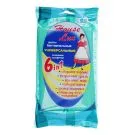
For routine household cleaning — countertops, appliance doors, tiles, mirrors, glass, garden furniture — rinsing is not typically required. The wipe deposits a thin film of cleaning solution that evaporates, leaving the surface visibly clean. The antibacterial action works on the surface while it's wet and shortly after.
For surfaces that come into direct contact with food (cutting boards, food prep counters) or items young children put in their mouths (teething toys, plastic blocks), it's good practice to let the surface air dry completely, then rinse with potable water or wipe with a clean damp cloth. This removes any residual surfactants or antibacterial agents that aren't intended for ingestion.
On sensitive materials where you've done a spot test, follow the same principle: wipe, let dry, then assess. If the surface looks streaky or feels tacky, a quick water wipe-down resolves it. There's no need for a separate neutralizing step; the product is designed for no-rinse convenience on compatible hard surfaces.