Free delivery: Estonia €30 · Latvia €35 · Lithuania €40 · Finland €60 · Poland €50
Free delivery: Estonia €30 · Latvia €35 · Lithuania €40 · Finland €60 · Poland €50. 14 days to return unopened goods. Original products from official suppliers. Convenient payment: bank links, Visa/Mastercard, Apple Pay, Google Pay, PayPal. We explain how the products differ and help you choose
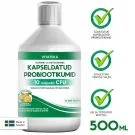
The main difference of this product is microencapsulated probiotic cultures in a liquid base. Microencapsulation means that each bacterium is enclosed in a protective shell that helps it pass through the acidic environment of the stomach and reach the intestine in a viable state. This technological solution is also used in capsule forms, but in liquid form it is combined with the fact that the product does not need to be washed down: you simply drink it like a beverage.
For those who have difficulty swallowing capsules or tablets, the liquid form is a practical alternative. In addition, a liquid probiotic is easy to include in a morning routine: measure out 15 ml (the daily amount according to the label), drink it, and you are done, with no need to keep water at hand to wash it down.
Storage must also be taken into account: liquid probiotics generally require a controlled temperature. According to the label, the product is stored in a cool, dark place and, once opened, in the refrigerator and used within 2 months; follow these conditions, as they directly affect the viability of the bacteria.
The composition remains multi-component: four strains (Bifidobacterium lactis, Lactobacillus acidophilus, Lactobacillus plantarum, Lactobacillus salivarius), vitamin C and L-glutamine, an amino acid that intestinal cells use as a source of energy. This combination in a single liquid product is less common than in capsule formats. In addition, the formula contains sweeteners (sucralose, acesulfame potassium), preservatives (potassium sorbate, sodium benzoate), xanthan gum, curcumin as a colourant and citric acid.