Free delivery: Estonia €30 · Latvia €35 · Lithuania €40 · Finland €60 · Poland €50
Free delivery: Estonia €30 · Latvia €35 · Lithuania €40 · Finland €60 · Poland €50. 14 days to return unopened goods. Original products from official suppliers. Convenient payment: bank links, Visa/Mastercard, Apple Pay, Google Pay, PayPal. We explain how the products differ and help you choose
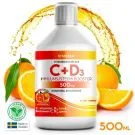
Liquid vitamin complexes and their counterparts in tablets or capsules contain the same active substances but differ in several practical respects.
Taking it. The liquid does not need to be washed down with a lot of water or swallowed whole — this is convenient for those who have difficulty swallowing capsules or simply prefer a different format.
Dosing. In liquid form, the dose is measured with a measuring spoon or cap, which makes it possible to adjust the volume if necessary. In tablets the dose is fixed.
Excipients. Liquid forms usually contain solvents, sweeteners or flavourings for taste and stability. If you are sensitive to any additives, check the full ingredient list on the packaging.
Storage. After opening, liquid products usually need to be kept in the fridge and have a limited shelf life once opened — check this on the packaging of the specific product.
As for the effectiveness of the active ingredients themselves — vitamin C, D3 and zinc — the dosage form is not of fundamental importance: what matters is that the dose matches your needs, not the form in which it is taken.