Free delivery: Estonia €30 · Latvia €35 · Lithuania €40 · Finland €60 · Poland €50
Free delivery: Estonia €30 · Latvia €35 · Lithuania €40 · Finland €60 · Poland €50. 14 days to return unopened goods. Original products from official suppliers. Convenient payment: bank links, Visa/Mastercard, Apple Pay, Google Pay, PayPal. We explain how the products differ and help you choose
These are two different classes of plant substances with different chemical natures and different areas of emphasis.
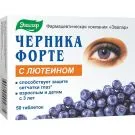
Bilberry anthocyanins are water-soluble pigments that give the berry its dark blue colour. In products for the eyes, they are included above all in the context of nourishing the tissues involved in visual perception and supporting tired eyes — especially the tiredness that builds up by evening after long hours of working with text or screens.
Lutein is a carotenoid, a fat-soluble substance. It is naturally present in the structures of the eye, and in products for the eyes it is added primarily as a component associated with protection against bright and blue light — the very light emitted by smartphone screens and monitors. In this complex, the lutein is obtained from marigold, one of the most common plant sources of this carotenoid.
So the formula combines both components deliberately: they complement rather than duplicate each other. Added to them are zinc, vitamin C, rutin and vitamins B1, B2 and B6 — each with its own role in metabolic processes and in the functioning of the nervous system, which is involved in transmitting visual signals.