Free delivery: Estonia €30 · Latvia €35 · Lithuania €40 · Finland €60 · Poland €50
Free delivery: Estonia €30 · Latvia €35 · Lithuania €40 · Finland €60 · Poland €50. 14 days to return unopened goods. Original products from official suppliers. Convenient payment: bank links, Visa/Mastercard, Apple Pay, Google Pay, PayPal. We explain how the products differ and help you choose
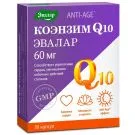
Coenzyme Q10 is often mentioned alongside vitamins C and E as an antioxidant, but its mechanism of action is fundamentally different.
Its role in the mitochondria. Q10 is an essential participant in the electron transport chain in the mitochondria: this is where the cell converts nutrients into ATP, the main “currency” of energy. Without Q10 this process is impossible. Vitamins C and E are not involved in it — they work differently, neutralising free radicals in other compartments of the cell.
The antioxidant function is secondary but real. In addition to its part in energy metabolism, Q10 does protect cell membranes from oxidative damage. Moreover, it can regenerate oxidised vitamin E, returning it to its active form — in other words, the two work as a pair.
The body synthesises Q10 itself. Unlike vitamin C, Q10 is not an essential nutrient in the strict sense: a healthy body produces it on its own. Supplements become relevant when the body's own synthesis declines — with age, in certain conditions or while taking statins.
Its concentration in the tissues is uneven. Q10 is most abundant where energy demand is highest: in the heart muscle, liver and kidneys. This explains why these particular organs are mentioned most often in the context of this substance.