Free delivery: Estonia €30 · Latvia €35 · Lithuania €40 · Finland €60 · Poland €50
Free delivery: Estonia €30 · Latvia €35 · Lithuania €40 · Finland €60 · Poland €50. 14 days to return unopened goods. Original products from official suppliers. Convenient payment: bank links, Visa/Mastercard, Apple Pay, Google Pay, PayPal. We explain how the products differ and help you choose
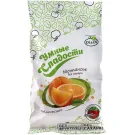
Isomalt is a sugar alcohol (polyol) made from sucrose, but its properties differ substantially from familiar sugar. It forms the base of these boiled sweets and is responsible for their characteristic hard, caramel-like texture.
A few important differences from ordinary sugar:
Lower in calories – isomalt contains roughly half the calories per gram compared with sucrose, although this does not mean the product is calorie-free.
Absorbed more slowly – isomalt is broken down and absorbed in the intestine more slowly than ordinary sugar, which sets it apart from fast carbohydrates.
Does not cause tooth decay – bacteria in the mouth hardly process isomalt, so it is regarded as a tooth-friendly sugar substitute.
Technological properties – isomalt holds its shape well when heated, does not crystallise and does not stick, which makes it ideal for making boiled sweets and caramel.
An important point: isomalt, like other sugar alcohols, can cause digestive discomfort when eaten in large amounts, such as bloating or a laxative effect. This is individual and depends on the sensitivity of the body. If you are trying isomalt products for the first time, start with a small amount.
For people who are trying to cut down on sugar but do not want to give up sweets completely, isomalt is one of the most studied and widely used replacements. Even so, with diabetes or other conditions that require carbohydrate control, it is worth consulting a specialist before eating it regularly.