Free delivery: Estonia €30 · Latvia €35 · Lithuania €40 · Finland €60 · Poland €50
Free delivery: Estonia €30 · Latvia €35 · Lithuania €40 · Finland €60 · Poland €50. 14 days to return unopened goods. Original products from official suppliers. Convenient payment: bank links, Visa/Mastercard, Apple Pay, Google Pay, PayPal. We explain how the products differ and help you choose
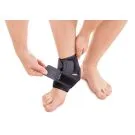
The brace is designed for use while moving, including sports, fitness, longer walks, active work, and everyday time both indoors and outdoors. Its purpose is not to lock the ankle in one position; it uses elastic material and five reinforcements to guide the joint into a more controlled position and reduce excessive side-to-side motion while leaving most normal movement possible.
For most people, this makes it a practical choice to wear continuously through an activity such as a game, training session, or a long walk. If you are not used to the support, start with a shorter period to let the skin and joint adjust. Remove it after the activity unless a specialist tells you otherwise.
If your activity involves running, jumping, or quick changes of direction, remember that the brace can reduce some unwanted motion but cannot make an already injured or unstable ankle safe on its own. Pain, giving way, or increasing swelling during activity is a signal to stop and have the ankle assessed, not to tighten the brace and continue.
When returning to activity after a cast or a period of immobilization, the brace may be helpful while muscles and soft tissues adapt, but use it only according to the plan given by your doctor or physiotherapist, including how tightly to wear it and when it is safe to stop wearing it.